
Creating lasting habits is an intricate process that combines psychology, neuroscience, and behavioral science. Understanding these elements can significantly enhance your ability to form and maintain good habits while breaking undesirable ones. Here’s a closer look at the science behind building lasting habits.
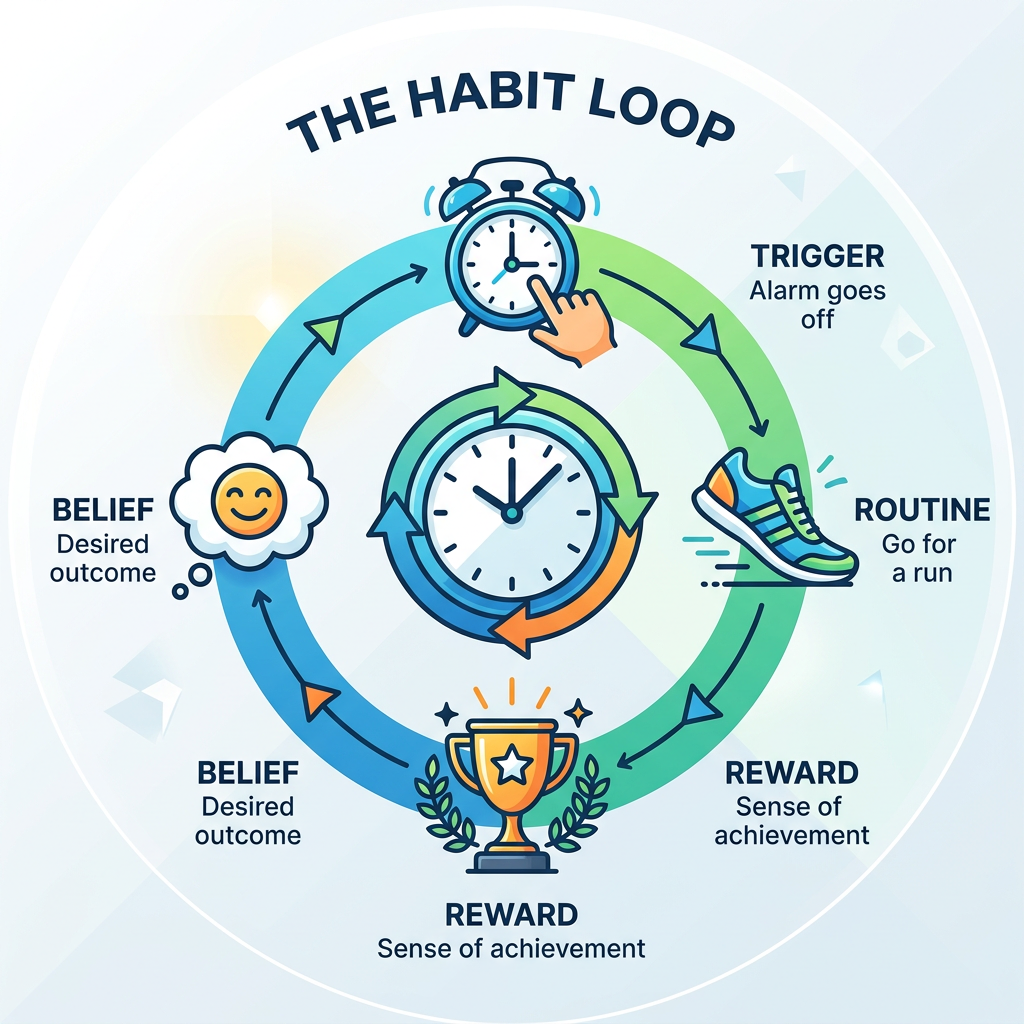
The Habit Loop
At the core of habit formation is the habit loop, which consists of three components:
- Cue: This is a trigger that initiates the behavior. It could be anything from a specific time of day to an emotional state or an environment.
- Routine: This is the behavior itself—the action taken in response to the cue.
- Reward: A positive reinforcement that follows the routine, making it more likely that you will repeat the behavior in the future. This reward can be immediate or delayed and plays a crucial role in habit formation.
The Role of Repetition
Repetition is vital for cementing habits in the brain. When behaviors are repeated over time, they become automatic responses to specific cues. This automaticity is what makes habits easier to maintain. Research suggests that it typically takes about 21 to 66 days for a new behavior to become habitual, depending on the complexity of the action and the individual’s circumstances.
Neuroscience of Habits
Neuroscientifically, habits are linked to the brain’s basal ganglia, which is responsible for controlling movement and decision-making. The more a habit is practiced, the stronger the neural pathways associated with that behavior become. This process underlines why habits are often hard to break; the pathways become well-trodden, leading to automatic responses.
Strategies for Building Lasting Habits
- Start Small: Begin with tiny, manageable changes that can be easily integrated into your daily routine. Gradually build on these small victories to create momentum.
- Set Clear Goals: Specific, measurable, achievable, relevant, and time-bound (SMART) goals provide clarity and direction, making it easier to stick to your new habits.
- Track Progress: Monitoring your progress can enhance motivation and accountability. Use journals, apps, or habit trackers to visualize your journey.
- Make it Rewarding: Link your new habit with immediate rewards to reinforce the behavior. Celebrate your successes, no matter how small.
- Environment Matters: Design your environment to support your new habits. For instance, if you want to eat healthier, keep nutritious foods readily available while reducing temptation from unhealthy options.
- Find Support: Surround yourself with a community or individuals who share similar goals. Social support can significantly enhance motivation and commitment.
The Importance of Persistence
Building lasting habits takes time and persistence. There will be setbacks along the way, but resilience is key. It’s important to view these challenges as part of the journey rather than failures.
Conclusion
Understanding the science behind habit formation can empower you to create meaningful and lasting changes in your life. By leveraging the habit loop, adopting effective strategies, and fostering resilience, you can master the art of building positive habits that stick.

Leave a Reply